



Published May 6, 2026 04:37PM
Yoga Journal’s archives series is a curated collection of articles originally published in past issues beginning in 1975. This article about Revolved Head-to-Knee Pose first appeared in the July-August 1992 issue of Yoga Journal.
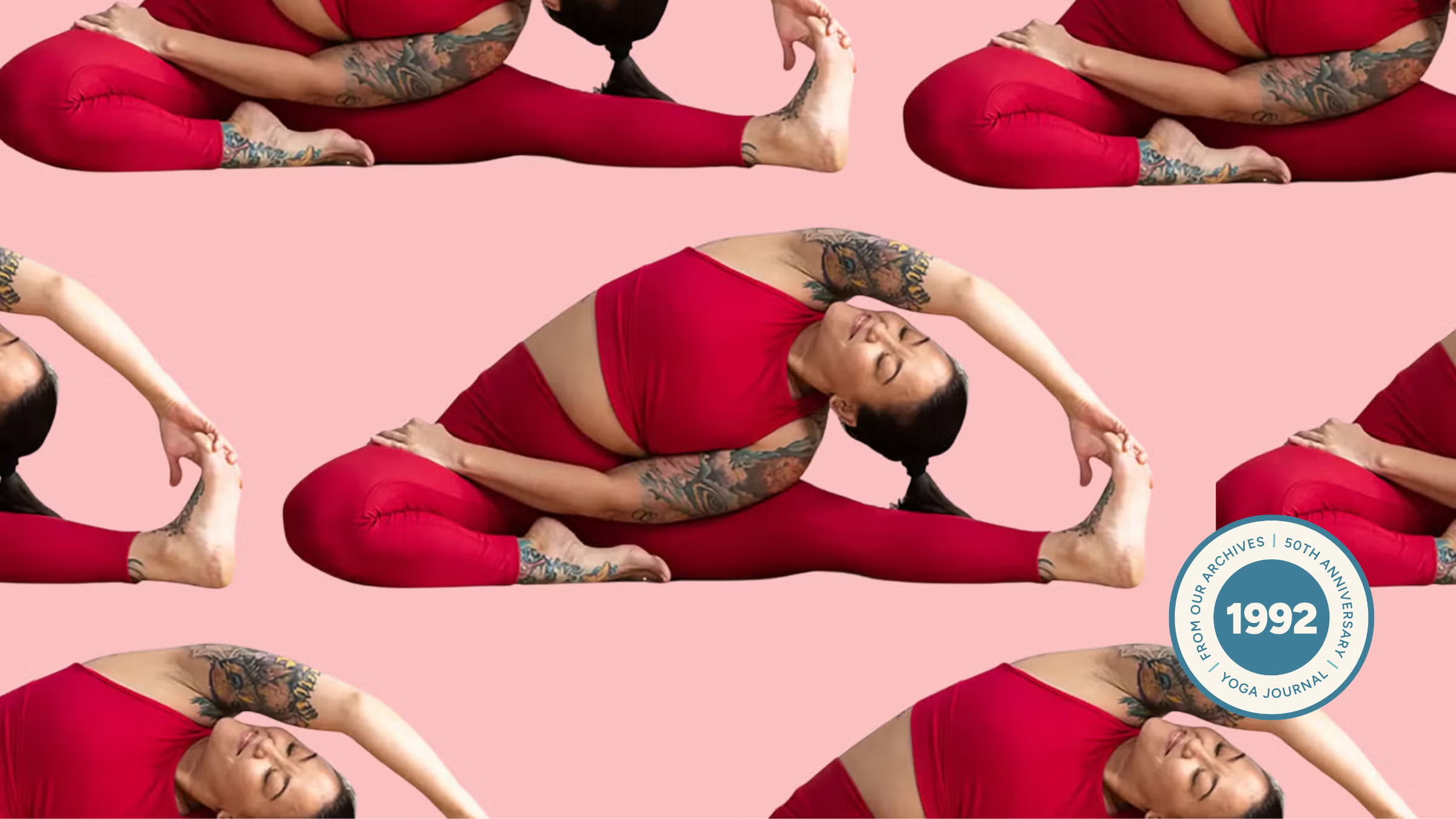
In describing seated side bend Revolved Head-to-Knee Pose (Parivrtta Janu Sirsasana), I have broken down the various movements that comprise the pose so you can assimilate them individually, like phrases of music.
Learning yoga asanas is like learning a new language—the language of the body. Like American Sign Language, the asanas speak in a three-dimensional language whose nuances are difficult to convey through the linear mode of ordinary speech. The total movement of an asana is composed of many smaller movements, all occurring simultaneously, like the swirling eddies and cross-currents that contribute to the overall flow of a river.
As you begin to understand kinesthetically how these movements relate to each other, your pose will come to its fullest expression. You will have mastered the grammar of space.
(Photo: Yoga Journal, 1992)
Revolved Head-to-Knee Variations
These variations of Revolved Head-to-Knee help to make sure that your entire body is onboard.
1. Beginner’s Variation
The following preparation for Revolved Head-to-Knee is helpful for beginning students. First sit on the floor in Staff Pose (Dandasana), with the back straight and the legs fully extended. Then bend your left knee and draw the left shinbone toward the left thigh. Holding your left ankle with your right hand, let your left leg drop out to the side so the top of the left foot comes into contact with the floor. Draw the heel of the left foot toward the left groin to create a wide angle between the thighs. If the left knee doesn’t touch the floor, you may want to place a folded blanket under it (Figure 5).
Now turn toward the bent leg so the side of your torso is in line with the extended leg. More flexible students can take hold of the inner right foot with the right hand. Less flexible students can take hold of the inner right calf. In either case, check that the sides of the rib cage are lengthened evenly and that you’re not side-bending at the waist. Reach your left arm behind your back and place your left hand at the top of the right thigh, or at the right side of the waist if you can’t reach the thigh. As you lift the spine, let your head turn to look over your left shoulder to get more from the seated side bend (Figure 1).
If your pelvis is tucking under, roll the pubic bone down toward the floor and lift the sacrum. Lengthen the spine out of the lower abdomen and deepen the twist. Let your right shoulder blade release toward your right arm as you broaden the collarbones and lengthen the inner left arm down toward the inner elbow. Keep the breath soft and the diaphragm wide. Hold the pose for another half minute, lifting the spine on the inhalation and deepening the twist on the exhalation. Then release and repeat to the opposite side.
2. Stability Variation
The next variation of Revolved Head-to-Knee uses a chair placed against a wall to ensure stability. First sit in Staff Pose facing the chair, with your legs underneath the chair and your feet braced against its back rung. Stretch out your arms so your hands press against the top of the backrest of the chair and your spine lengthens forward and up. As you press the backrest away from you, feel the stretch in the lower back. (If you can’t reach the backrest of the chair without rounding your lower back, move the chair closer to your torso so your feet are beyond the back rung of the chair and are braced against the wall instead.)
Now release the hands from the back of the chair and draw the right leg back into position, with the right knee well out to the side and the right heel drawn toward the right groin. (If your right knee is not in contact with the floor, use a folded blanket for support as in Figure 5.) Turn your torso toward the bent knee, pressing your fingertips into the floor as you lift the spine and deepen the twist. Then bring your left hand to the top of the backrest so your left arm is directly above your left leg. Focus on lengthening the left side of your rib cage as you press the backrest away with your left hand.
When both sides of the rib cage are evenly extended, raise your right arm overhead in a wide circle and place your right hand on the backrest over your left hand. Now you will feel the stretch along the right side of the waist and the outer right hip. Press your right knee into the floor and press the backrest of the chair away with your right hand to deepen the stretch. This stretch of the outer waist and outer hip has a peculiar intensity, fiery and sheath-like, because what is stretching here is primarily connective tissue rather than muscle. Hold the position for another minute, deepening the stretch of the outer hip, and then repeat to the other side.
3. Twisting Variation
The use of a chair emphasizes the role of the upper back, shoulder blades, and arms in deepening the twist. First sit in Staff Pose with your legs extended underneath the seat of the chair and your feet braced against its back rung. Then draw the right leg back, placing the bent knee out to the side and the top of the right foot on the floor close to the right groin. (If the right knee is not in full contact with the floor, use a folded blanket for support as in Figure 5.) Turn your torso toward the bent knee. Adjust the position of the legs: Shift the left foot so that it presses against the back rung of the chair at its junction with the right back leg of the chair, and bring the right knee in line with the right side of the chair. Keep a wide angle between the thighs. The left foot, the right front chair-leg, and the right knee should now be in one straight line (Figure 3).
Then extend your right arm out to the side and bring it overhead with a broad circular movement, placing your right hand on the backrest of the chair at the top left corner. Turn your head to face the ceiling and let the back of your head rest on the seat of the chair. (One of the most common complaints in practicing Revolved Head-to-Knee is neck tension due to the awkwardness of the head position. Supporting the head with the chair seat relieves the strain on the neck and allows you to work more easily and deeply with the upper back.)
Turning your left arm so that the inner upper arm faces the ceiling and your left thumb faces the floor, take hold of the right front chair leg with your left hand. Hold this position for a few breaths as your body accepts the twisting side bend. Then press your right knee into the floor to lengthen the outer waist and outer hip, and release the left shoulder blade out toward the left elbow to open your chest toward the ceiling. As you move more deeply into the twist, work your right hand farther and farther down the left side of the backrest.
Continue to press the right knee into the floor and release the shoulder blades away from the spine. When the sternum comes to face the ceiling, remain quietly in the pose for several more breaths, then release and practice the pose to the opposite side.
How to Practice Revolved Head-to-Knee Pose
Now try practicing the full Revolved Head-to-Knee. Start by sitting in Staff Pose with both legs extended. As you bend the right knee, soften the tight muscles at the back of the knee by pressing into them with your fingertips. Then draw the right ankle toward the right groin, and let the right shinbone rest on the floor. Press your fingertips into the floor and turn your torso to face the bent knee.
Feel how your weight is distributed on the sitting bones. If all the weight is on the bent-leg side, your pelvis is probably falling back onto the sacrum. To create the proper lift of the pelvis, press your bent knee into the floor and shift the weight onto the left sitting bone (the extended-leg side). Allow the bent-leg sitting bone to come off the floor in order to lift the pelvis over the thighbone of the extended leg. If you’re unable to shift the weight onto the sitting bone of the extended leg because of tightness in the hips, try placing a bolster or a thick folded blanket under the sitting bone on the bent-leg side. This support will help tilt the pelvis toward the extended leg. Be sure to place the bolster under the thigh of the bent leg, as well as under the sitting bone. Now place the palm of your left hand on the floor by the inner left calf. Once again, press the right knee into the floor to lift the pelvis over the left thighbone.
At the same time, slide your left hand forward on the floor along the inner left leg, so that eventually the left hand extends beyond the foot and the left side of your rib cage comes into contact with the left thigh. Now sweep your right arm overhead in a wide arc and take hold of the outer left foot with your right hand. Then bend your left elbow and, hooking your left shoulder against the inner left knee, take hold of the inner left foot with your left hand (Figure 6).
One of the most difficult aspects of the side bend is maintaining the balance of the torso over the extended leg (the left leg). As you begin to deepen the twist, the weight of the torso tends to fall toward the outer leg, and the left knee and foot roll out to the side. To bring the weight of the torso back toward the inner left leg, roll your front left hipbone toward your inner left thigh and draw the left side of your waist forward. This action stabilizes both the pelvis and the extended leg-your left knee and foot will now point directly toward the ceiling, and your pelvis becomes a firm base for the extension of the spine.
As your awareness moves up to the rib cage, think once again of bringing your torso toward the inner left leg so your spine eventually comes to rest on the extended leg. If you twist the upper body by tightening the diaphragm and rolling the right shoulder and right side of the rib cage back, you will tend to collapse onto the outer leg and create tension in the shoulders and neck. Instead, work from the back of the body. Let the left shoulder blade release toward the left elbow and bring the back of your left shoulder more and more into contact with the inner left knee. Then let the right shoulder blade release toward the right elbow so that your whole upper back is soft and broad. Turn your head to face the ceiling, keeping your eyes soft.
Allow your head to fall back naturally if there is tension in the throat. Hold this position for another minute, then release and repeat to the other side. If you have difficulty hooking your shoulder against the inner knee of the extended leg, try the following variation.Sit with your left leg extended and your right leg in Janu Sirsasana position. Keep a wide angle between the thighs. Now take a firmly rolled blanket and place it along the inner left leg. Turn your torso toward the bent knee and, as you extend to the side, hook your left elbow against the blanket roll and take hold of the inner left foot. Bring your right hand onto your outer waist (Figure 4).
Stay in this position for several breaths before moving deeper into the pose. Press your left elbow back against the blanket roll and release your left shoulder blade away from the spine to draw your left shoulder forward. When the left shoulder comes directly above the left elbow, hook the left shoulder against the blanket roll and bring your right arm overhead to take hold of the outer left foot. Feel how the spine is now aligned more evenly over the extended leg. Hold for several breaths, then practice on the opposite side.
If you feel discomfort or strain in your neck and throat while practicing Revolved Head-to-Knee, try the following variation. Sit with your right leg extended and your left leg bent, foot to inner right thigh. Place a folded blanket across the shin of your extended leg (Figure 5). Turn your torso toward the bent knee, pressing your right hand against your inner right leg to help deepen the twist. Turn the left palm toward the ceiling and raise the arm overhead. Lengthen the inner left armpit and inner left arm to bring the whole upper arm behind your left ear, as you would in Extended Side Angle Pose (Utthita Parsvakonasana). When the upper arm comes behind the ear, the head and neck are free to turn easily.
Now incorporate the movement of the top arm into the whole movement of the pose. Bring your left arm back down to the floor and once again turn your left palm to face the ceiling. Then, pressing your left knee into the floor and lifting your pelvis over the right thighbone, sweep your left arm overhead in a strong wide arc and take hold of your outer right foot. Remember to lengthen the inner left armpit and the inner upper arm to open the chest and bring the left arm behind the left ear.
Let your head rest back on the folded blanket and extend your right arm out at a 90-degree angle to the extended leg, with your palm against the floor (Figure 5). Release your right shoulder blade away from the spine and walk your right hand farther away from the leg. When your right shoulder is braced against the inner right knee, bend your right elbow and turn your upper arm out, taking hold of the inner right foot with your right hand. Continue to release the shoulder blades away from the back rib cage so the cervical spine lengthens and the head turns easily to face the ceiling. Hold the position for several more breaths and then repeat to the other side.
When we practice yoga with awareness, not only can we radically change the physical structures of the body—the muscles, joints, and organs—but we also increase our powers of perception, particularly our sense of spatial relationships. We discover at a sensory level how one part of the body relates to another, and how movement can unite them. We learn how to bring intelligence to different parts of the body simultaneously and how to organize ourselves more effectively in space. From this heightened consciousness, which I refer to as “the simultaneity of awareness,” the integration or wholeness of the body is created.
