



Sometimes I wish I could go back and give my younger self a simple piece of advice: “Don’t marry a monk!” But I can already see her raise an eyebrow and set about proving me wrong. The better counsel, though far less pithy, would be: “Don’t pedestalize men, don’t make marriage a conquest, don’t seek in spirituality a form of external validation.” But some lessons we must learn through direct experience, through the unmistakable taste of our most precious illusions dissolving.
When I first began dating the monk, my concerned mother asked me about his intentions. He responded with a very on-brand koan, “Disappointment and heartache, of course.”
I remember the silence that followed on the phone when I tried to relay his response, my mother’s palpable bewilderment. I laughed, nervously, defensively, and tried to explain that this was a Buddhist insight, not an insult. But my stomach had tightened in a way I wouldn’t acknowledge for years.
He wasn’t being cavalier or even clairvoyant. In the grand tradition of disillusionment as dharma, he was reminding me that projecting happiness onto another is a recipe for heartache, and more subtly, that heartache would be a far greater teacher than he could ever be.
The Search for “The One”
I’d been searching for the elusive “one” for as long as I could remember. My earliest memories in India include Nayab, the neighborhood boy I played house with and assumed I’d marry. We were 3, maybe 4, but our games carried the weight of prophecy. We’d share chocolates with the solemnity of communion, conspire against our Pentecostal landlady with elaborate pranks involving banana peels and imaginary villains. As we navigated our middle-class Bangalore suburb—its temples and mosques, its vendors and beggars, its endless network of aunties who knew everyone’s business—I felt our pairing as fated reality. Not something I chose but accepted, a faith older than belief.
I remember the exact texture of disappointment I felt when he chose to play cricket with older boys instead of continuing our games. How betrayal sat hot and tight in my chest as I’d watch from my window as he ran with the others. Even as a child, I was already learning that love consisted of waiting for someone to choose you back.
When I was 5, my family left India, and I had to leave the one who I had sincerely felt was my (however unwitting) betrothed behind. When we migrated to the US, my preoccupation with arranged marriage morphed into the newly learned expression of being “boy crazy” and showed up as painstaking crushes, each one chronicled in detail in my journal. Each love, no matter how common, was elevated by my affection. The details of their crooked smile, tousled hair, even their indifference, became gems in my florid imagination. With each one, I wove a potential future in my mind, a tapestry of small exchanges that added up to an epic romance.
Shy by nature, I rarely expressed my deep feelings, preferring instead the fantasy world of my adoration. Occasionally, one would develop a reciprocal crush, with eyes like “love crumbs,” or send me a note worthy of E. E. Cummings:
do you like me?
circle yes
or no
In these instances, I felt equal parts elated and horrified. Inevitably, the connection would sputter like a sparkler in a blaze of curiosity and speculation, before fizzling to an obscure and dissipated heat in the shock of my embarrassment.
When I met the monk at 24, the encounter felt like the apex of all those dashed hopes. I had even dreamt of his bald head a week before first seeing him at a buzzing spring party. In the dream, I felt such recognition that I woke up with a giddiness I could barely contain. I remember spinning in my room, with my hands to my chest, as though I’d received a long-awaited invitation to a joyful reunion.
When I saw that same head across the crowded room, my body made the connection before my mind could even process it. Our eyes met, and everything else faded away. We gazed wordlessly at each other for hours as the party ebbed and flowed around us like vegetation in time-lapse, lost in what one friend called “the most intense eye contact I’ve ever witnessed.”
After that moment of soul recognition, we were together for a decade.
The Paradox of Spiritual Romance
It was a thorny decade that taught me hard lessons about devotion and discernment. Before meeting him, I’d been engaged in rigorous self-inquiry and yoga, living like a nun myself; celibate, contemplative, and discovering I could heal personal and collective trauma through practice. I moved through the world as a quiet poet, convinced that within my feminine essence pulsed an elixir of transformative potential.
When the monk and I became involved, all that self-focused ardor released with him at its center, a tidal wave of longing that surprised us both with its force. There was an indescribable yet powerful magnetism between us that others could feel, too, like a tension held in suspense. Friends would excuse themselves from our presence, saying it felt “too intimate” just watching us sit together. We’d meditate facing each other, breathing in sync until the boundaries between us dissolved.
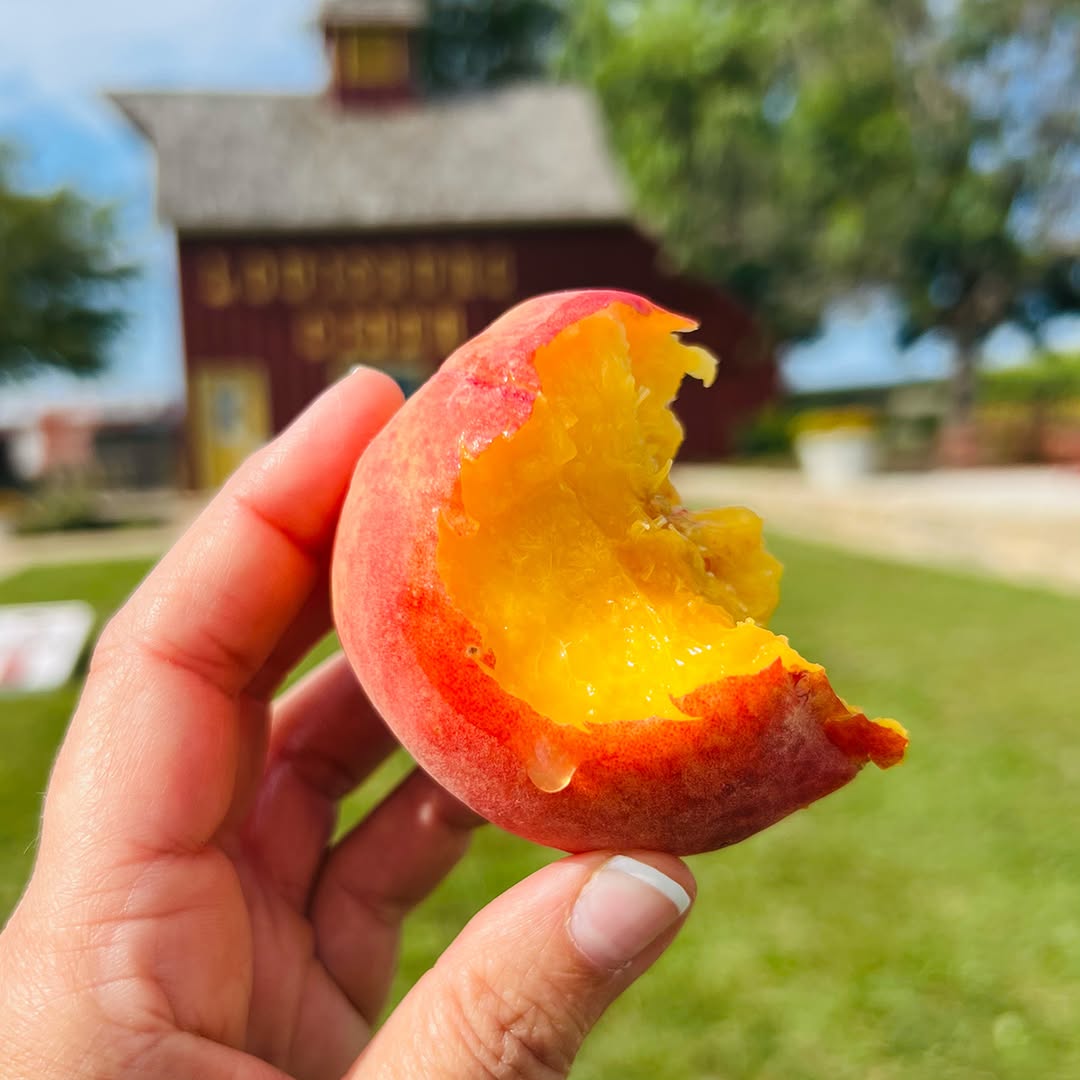
Faithful to his Zen lineage, he taught me that attention itself is prayer. I remember him eating a peach at a farmers market, juice running down his chin, completely absorbed. No self-consciousness, no performance, just presence so complete it looked like worship. “This is how you could experience everything,” he said, offering me a bite. “Every moment could be this vivid.”
He taught me that anything met with aliveness becomes a doorway to the erotic.
The irony that it was a monk who initiated me into the art and angst of desire isn’t lost on me.
Beauty and the Monk
The monk loved beauty, but his was the beauty of empty space, of morning light on bare walls, of silence between thoughts. He could spend hours contemplating the curve of a ceramic bowl or the grain in wood flooring. His apartment was deliberately spare, not from poverty but from preference, each object chosen with the care of someone arranging stones in a Zen garden.
I loved beauty, too, but mine was the beauty of abundance, fabrics that invited caresses, colors that sang together, flowers withering gloriously in glass vases. Where he saw clutter, I saw nourishment. Where I saw deprivation, he saw clarity.
“Why do you need so many pillows?” he once asked, genuinely puzzled by my attempt to soften his angular couch.
“Why do you need so much emptiness?” I countered.
He smiled at that, recognizing the question we were living. Can two people with opposite orientations toward beauty create something beautiful together?
We tried. God, how we tried. We designated spaces, his meditation corner remained pristine, my desk overflowed with journals and dried roses. We negotiated aesthetics like diplomats, finding middle ground in plants (alive but minimal) and single pieces of contemplative art (presence without excess). But the tension wasn’t really about decor. It was about our fundamentally different ways of being nourished, of feeling safe, of touching the sacred.
The most revealing conversation happened in our seventh year, on a Thursday night when I found him on his cushion at 2 a.m. This wasn’t unusual; he often sat through the night because he felt those liminal hours offered him something essential.
“Do you love your practice more than you love me?” I asked from the doorway.
He opened his eyes slowly, considering. “My practice is how I love you,” he said. “When I sit, I’m creating space for us both.”
“But I’m alone in that bed while you’re creating space,” I said. “I’m lying there wondering if enlightenment means never needing anyone.”
He was quiet for a long moment. When he spoke, there was something raw in his voice: “The deepest intimacy requires a kind of detachment, not from caring but from grasping. When I can love you without needing you to complete me or be different than you are, that’s when real passion becomes possible. The kind that doesn’t consume but allows and illuminates.”
“But I want to need and be needed,” I said. “I want the consuming kind too.”
He nodded, understanding. “I know. And that’s not wrong. It’s just . . . different from what I can offer.”
We stood there in the dark apartment, the distance between us revealing everything, how I’d mistaken his spiritual depth for emotional availability, how he’d mistaken my devotion for acceptance of his boundaries, how we’d both mistaken intensity for intimacy.
The Necessary Disillusionment
His refusal to participate in my romantic projection was both a poison and an antidote. Every time I’d spin fantasies about our future, he’d remind me that the future was an illusion. When I’d declare my love, he’d say, “You love your idea of me.” It was maddening. It was true.
Looking back, I marvel at how perfectly equipped he was not only to trigger and injure me but ultimately to set me free. Practice loosened my grip even as society kept pressing the ring into my palm, whispering that a woman without her “one” was a story without an ending.
Through the promised boons of disappointment and heartbreak, I learned that no teacher or lover, regardless of their degree of realization, could substitute for my own inner knowing. His perspective on attachment wasn’t wrong, there was profound wisdom in his ability to love without grasping, to care without controlling. But it wasn’t complete either. It didn’t account for the holiness in yearning itself, the vulnerability of needing another human being, the courage required to depend on someone who will inevitably disappoint you.
After our separation, which took two years of backing away and returning, of couples therapy sessions where he’d sit in perfect posture while I wept, questions piled up like laundry.
Who would I be without the quest for “the one”? What if this concept is a relic from when women’s destinies depended on male selection? What if this romanticism now diminishes rather than serves me?
Challenging the myth of “the one” felt like dethroning a beloved deity. Some mornings I’d wake forgetting we’d separated, reach for him, find empty space, and the grief would crash fresh. Other mornings I’d wake relieved, my body finally unclenched from years of trying to make an impossible dynamic work.
The Inside-Outside Woman
While traveling through India years later, designing lingerie inspired by erotic arts and textiles, I encountered a fascinating dichotomy in legendary old texts, like the Kama Sutra and Ratirahasya. “Inside women” dwelled in domestic spaces, blooming like rare flowers in walled gardens. “Outside women” moved through the world of men by trade or necessity.
The rare “inside-outside woman” claimed both, the care of home and the intrigues of the world. She could be scholar and wife, ambassador and mother. Today this isn’t exotic but increasingly common, and for many of us, it’s created a particular kind of tension, straddling accommodation and ambition, never quite comfortable in either role.
I realized I’d been trying to be an “inside woman” to the monk’s spiritual mastery, the devoted student, the supportive partner. But I was also an “outside woman,” a teacher, writer, seeker in my own right. The tension between these selves had torn me apart.
This dual existence isn’t every woman’s story, but it was mine, and I’ve witnessed it in so many others, this attempt to be everything, to honor both the inherited duty to tend and nurture and the newly won right to create and achieve. We become shape-shifters, adapting ourselves to each context, rarely feeling we can bring our whole selves anywhere.
As I sat with this fissure at the heart of my being, I couldn’t help but see it replicated elsewhere. Women belong inside, or outside. Spirituality exists in monasticism, or we forgo it completely for materialistic pursuits. We love with either passion or practicality. All of these interlocked binaries were beginning to collapse for me, leaving both ruin and a newfound sense of possibility.
Perhaps the most extraordinary lesson from my marriage was recognizing that I desire both the divine and the domestic, the ecstatic and the familiar. I want a transcendent merger and sovereign selfhood. I crave both the dissolution of meditation and the sweet ordinariness of shared breakfast. How could any one person fully satisfy or contain these contradictions? Rather, the question was how fully could I embody my intrinsic wholeness, how willingly could I offer myself to the altar of my relationships, how joyfully could I dance between emptiness and form?
Rewriting the Love Story
Every man who’s loved me has wanted to rescue me. Even the monk with his radical nondual posture wanted to show and teach me a better path.
And I’ve reveled in and resented their heroics. The truth? I haven’t wanted to be saved but to feel worthy of it. I haven’t wanted “the one” as much as what it represents: protection and community, sovereignty and abundance.
I think of my grandmother, married at 16, who never questioned that her husband was her doorway to the world. I think of my mother, caught between tradition and modernity, who taught me to be independent while secretly hoping I’d find a good man to take care of me. I think of myself and so many women I know, carrying these stories in our cells, trying to surpass our ancestors’ wildest dreams.
Perhaps this is the particular challenge of my generation, we who have one foot in the old binaries and one in self-determination, who carry our grandmothers’ stories of duty and our own dreams of autonomy. We’re making love our own, taking it from the collective hearth and rekneading the dough with our own hands.
Sometimes love’s greatest act is allowing loss to rearrange who we thought we were.
We’re discovering though the perilous pilgrimages of divorces and situationships, that love is more a generative act than a state of being. Love isn’t something to achieve or attain but the invisible weave we all belong to, return to, cocreate. I find solace in this, like stepping closer to a blazing fire on a cold night and feeling my fingers and toes thaw and warm with renewed circulation.
Maybe I needed to marry and divorce a monk to reach this conclusion. Maybe I needed a path that would strengthen my faith in love while deepening my capacity for doubt. I’ll never stop being a romantic. But sometimes love’s greatest act is allowing loss to rearrange who we thought we were. I know now that love is a temple built on paradox, where radical openness requires finely calibrated boundaries, where vows aren’t meant to seal happily ever afters but invite us into ever deepening initiations.
In seeking “the one,” I’ve found instead that my heart, with its inscrutable maps and tongues, is the greatest guru. It exhorts me: Don’t reduce, don’t rush. Savor, trust, cherish. Give yourself completely to a practice that never ends.
The monk was right about disappointment and heartache. They were my teachers. But I can’t quite accept detachment as a superior path. I would rather have freedom, freedom to want, freedom to cling, freedom to push away, freedom to evolve. Freedom to feel. To fumble. To fail.
Sometimes attachment is how we learn about our own capacity for connection with another, our many needs, small and big, and the extent to which our spirits are capable of intertwining.
Sometimes it’s through the wrong relationship that love teaches us to finally choose ourselves.
